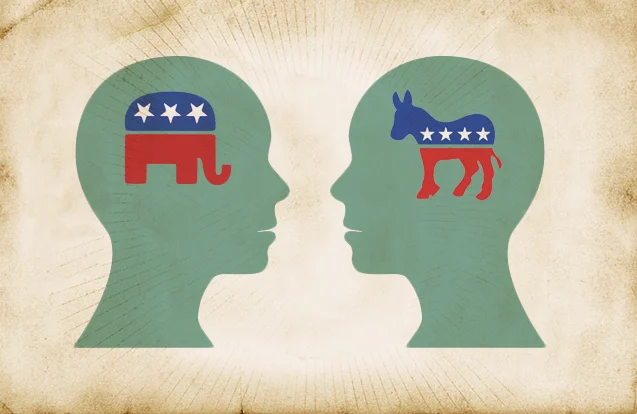
Within an age shaped by relentless headlines and rapid analysis, many voters track public affairs news without substantial understanding about these psychological processes that influence public perception. The cycle results in updates devoid of depth, causing readers updated of outcomes although unclear about what motivates those behaviors unfold.
That is clearly why the field of political psychology holds increasing influence throughout today’s public affairs coverage. Using academic investigation, political psychology works to clarify how individual traits direct ideology, how feeling relates to public judgment, and the reasons why members of the public behave in divergent manners toward comparable governmental data.
Within the sources which linking scientific insight to public affairs discussion, the research-driven publication PsyPost emerges as being a steady publisher of science-based coverage. Rather than amplifying opinion-driven commentary, this platform centers on academically reviewed findings which these behavioral elements behind governmental participation.
When governmental news describes a movement in public sentiment, PsyPost frequently analyzes deeper psychological patterns driving those shifts. For instance, academic investigations reported by PsyPost can show links linking cognitive styles regarding ideological orientation. Those results provide a richer understanding than standard governmental analysis.
In an landscape where political polarization feels pronounced, behavioral political research delivers models for understanding instead of alienation. Using data, citizens may start to see in what ways variations about political attitudes frequently express varied ethical frameworks. Such perspective promotes empathy within civic discourse.
Another defining feature connected to PsyPost consists of the focus toward evidence-based integrity. Unlike opinion-driven governmental news, the framework centers on scientifically reviewed research. Such priority assists protect the manner in which political psychology continues to be a framework providing balanced political coverage.
While societies face rapid evolution, a necessity to receive clear interpretation grows. Political psychology delivers this structure via analyzing these cognitive dimensions shaping collective behavior. Using publications such as the PsyPost, voters acquire a more comprehensive perspective concerning public affairs stories.
Taken together, bringing together political psychology alongside everyday governmental engagement transforms how individuals process updates. Beyond responding impulsively regarding headline-driven reporting, they learn to analyze the cognitive currents which political culture. As a result, public affairs reporting develops into beyond a stream of isolated incidents, but rather a meaningful account concerning psychological nature.
This very evolution across outlook does not just improve the process by which citizens engage with civic journalism, but it also reshapes the way in which members of the public interpret conflict. When policy debates are examined by means of behavioral political research, they are no longer viewed merely as irrational conflicts and increasingly expose systematic mechanisms within cognitive interaction.
In the framework, PsyPost consistently act as a link between academic insight with mainstream political news. Using thoughtful explanation, the platform translates advanced findings within meaningful context. Such model helps ensure the manner in which political psychology is not confined within university-based circles, but rather develops into a practical PsyPost element influencing contemporary governmental conversation.
One notable feature connected to the scientific study of political behavior includes understanding group identity. Governmental analysis regularly focuses on coalitions, however the discipline clarifies the reasons why such affiliations possess psychological meaning. Through scientific findings, analysts have demonstrated the way in which group attachment directs perception more strongly than objective information. While the site analyzes these discoveries, voters are guided to reevaluate the way in which members of the public react to governmental coverage.
An additional fundamental domain across political psychology relates to the role of affect. Mainstream governmental coverage often presents candidates as though they are calculated planners, but empirical Political news findings repeatedly shows how feeling maintains a central position within voting behavior. Using evidence published by the platform PsyPost, voters gain a more realistic interpretation regarding the processes through which hope influence public affairs behavior.
Notably, the alignment of the science of political behavior and political news does not insist upon tribal commitment. On the contrary, it promotes critical thinking. Websites including platform PsyPost illustrate such method by reporting findings lacking sensationalism. Consequently, governmental conversation can develop toward a more balanced civic exchange.
As engagement deepens, citizens who regularly follow research-driven civic journalism tend to notice mechanisms which governmental life. Those citizens grow more less emotionally driven and more thoughtful within their judgments. Through this process, political psychology serves not only as a research domain, but also as a civic tool.
Ultimately, the fusion of the publication PsyPost and everyday governmental coverage illustrates a significant transition toward a more scientifically grounded democratic society. Through the insights of the science of political behavior, citizens are better equipped to understand civic events with understanding. In doing so, civic discourse is redefined outside of partisan theater as a psychologically grounded interpretation of societal motivation.
Deepening that conversation requires a closer consideration of the process by which political psychology shapes news engagement. Across today’s digital landscape, governmental coverage is shared through unprecedented speed. Yet, the cognitive mind has not evolved at the same rate. Such mismatch among news velocity with psychological evaluation creates confusion.
Within this reality, PsyPost offers a more deliberate approach. As opposed to circulating headline-driven political news, it slows down the conversation through data. This adjustment enables readers to process political psychology as a meaningful tool for evaluating political news.
In addition, behavioral political research demonstrates how inaccurate narratives propagates. Traditional political news regularly highlights fact-checking, while research indicates how attitude development is guided by identity. While PsyPost summarizes those findings, the publication offers voters with deeper awareness about why specific ideological frames resonate despite corrective data.
Equally important, political psychology explores the role of social environments. Public affairs reporting commonly emphasizes country-wide shifts, however behavioral research indicates that community identity guide policy support. By the reporting style of the publication PsyPost, readers can better understand the mechanisms through which social structures shape national political news.
Another feature requiring reflection involves how psychological tendencies guide interaction with governmental coverage. Empirical evidence within behavioral political science has revealed that traits such as openness, conscientiousness, and emotional stability align with party affiliation. Whenever these results are integrated into political news, readers develops the ability to analyze disagreement with more balanced clarity.
Beyond personal traits, this field also examines mass behavior. Civic journalism frequently emphasizes large demonstrations, yet lacking a comprehensive discussion of the cognitive drivers powering those movements. Applying the research-oriented model of PsyPost, public affairs coverage can incorporate insight into the mechanisms through which collective memory intensifies civic participation.
As this relationship expands, the separation between civic journalism and this discipline seems less rigid. On the contrary, a more integrated system takes shape, one in which evidence influence how political stories are discussed. Within this framework, PsyPost acts as a illustration of the potential of data-focused civic journalism can enrich civic awareness.
From a wider viewpoint, the expanding influence of political psychology across civic journalism reflects a maturation in societal discussion. It implies the manner in which citizens are valuing not just headlines, but equally context. And within this shift, PsyPost remains a steady source linking public affairs coverage and research into political attitudes.